Hatching Eggs breed guide
How shipped hatching eggs travel, how to rest and set them, and what hatch rates are realistic.
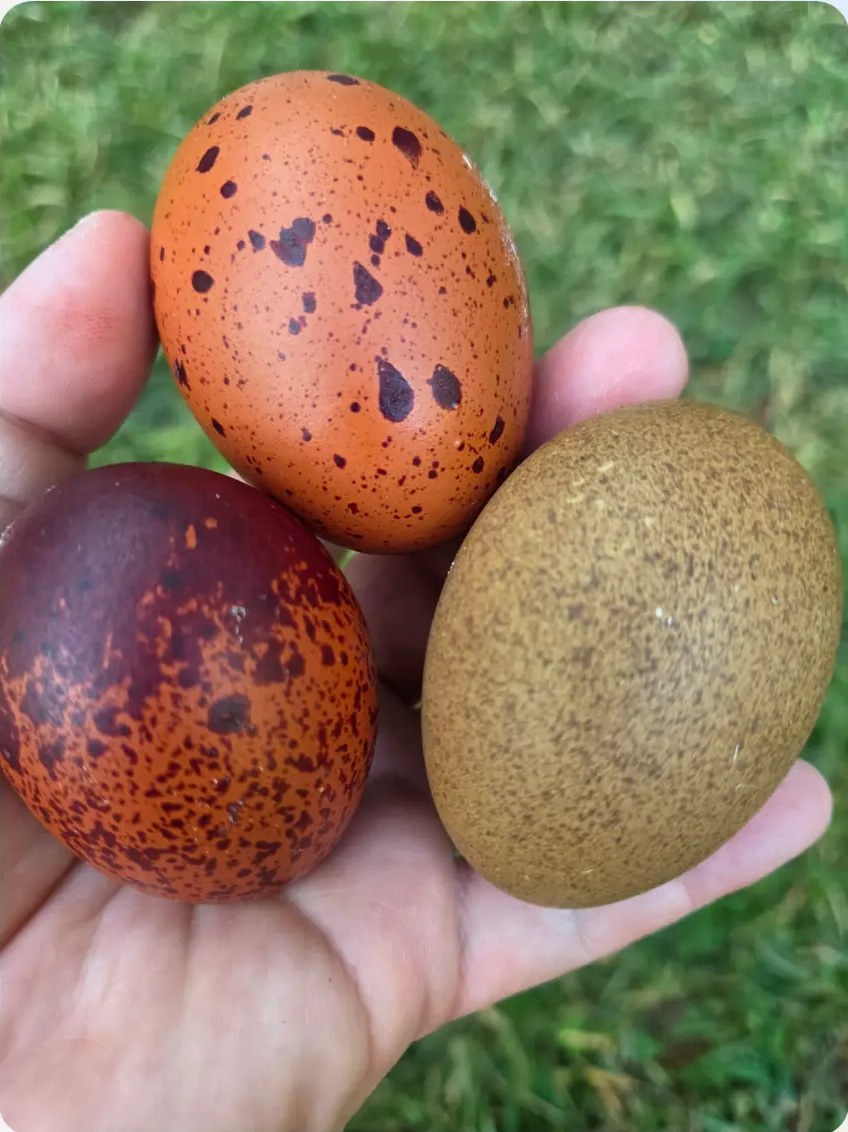 Photo: Serenity's Cluckin' Chaos
History & origins
- Shipping fertile eggs by post dates back to the early 1900s hatchery catalogs, when rail and parcel post let small farms buy bloodlines they could never drive to.
- Today the same trade runs on breeder-to-breeder sales: a box of a dozen eggs moves genetics across the country for a fraction of the cost of shipping live birds.
Care & housing
- Unpack immediately and rest eggs pointy-end down at room temperature for 12-24 hours so the air cells can resettle.
- Set at 99.5°F forced-air, 45-55% humidity, turning at least three times a day until lockdown on day 18 (chicken) or by species.
- Candle on day 7 and day 14 and pull clears and blood rings to keep the incubator clean.
Breeding tips
- Expect 50% hatch on shipped eggs as a good result — scrambled air cells, not fertility, cause most losses.
- Collect breeder eggs twice daily, store no more than 7-10 days at 55-60°F, and never wash eggs you intend to hatch.
- Run one rooster per 8-12 hens for reliable fertility; too many males lowers it.